


Athens is a city that can surprise even the most seasoned traveler. Famous for its ancient ruins and classical beauty, it’s also a living, modern metropolis filled with contrasts — where ancient temples overlook street murals, and the aroma of grilled souvlaki drifts past neoclassical façades. Beyond the postcard views, the city beats with energy, creativity, and an unshakable spirit that’s uniquely Athenian. The best way to experience it isn’t by rushing from site to site, but by following its rhythm — watching, tasting, and listening as history and daily life intertwine. Whether you have just a few hours or a full week, these ten experiences reveal both the Athens locals cherish and the one every visitor falls in love with.
The 10 Best Things to Do in Athens
Nikolaos Koliakos • October 25, 2025
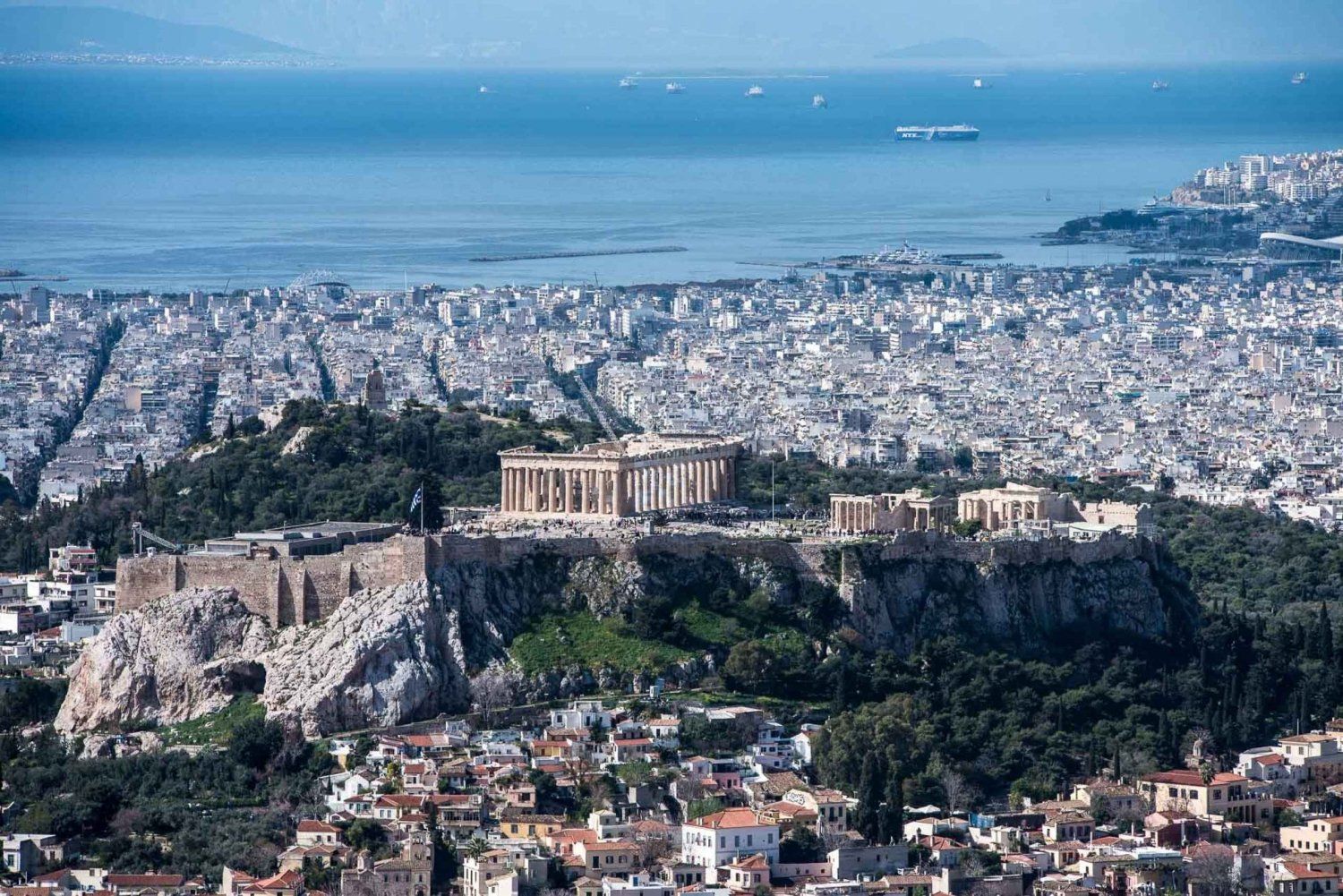
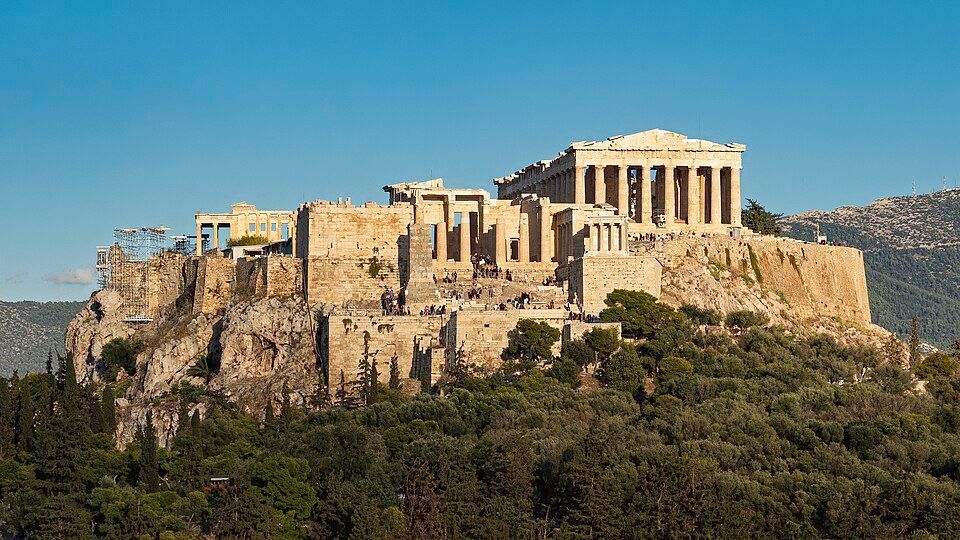
The Acropolis opens its gates at 08:00 AM, and arriving at that exact hour is the secret to experiencing it at its most intimate. The climb begins on the southern slope, where the marble path glimmers faintly under the first light. The scent of wild thyme rises from the cracks between stones; cicadas begin their morning chorus while the city below is still half asleep. As you pass the ancient Theater of Dionysus, the sounds of modern Athens fade away until only the rustle of olive leaves and the echo of your footsteps remain. Higher up, the view expands—white rooftops, terracotta domes, distant sea—and you sense that this ascent is not merely physical but spiritual. At the summit, the Parthenon stands serene, its Doric columns aligned like the rhythm of a hymn. The marble gleams in gold, then blushes to rose as the sun rises higher. Around it, the Erechtheion leans gracefully, the Caryatids carrying eternity on their shoulders. Pause here; feel the wind move through the columns as it has for 2,400 years. The city spreads beneath you like a living amphitheater, layered with history and noise and hope. When the first groups arrive, you will already have had your quiet communion with Athens—the moment when its ancient soul and your own breath share the same rhythm.
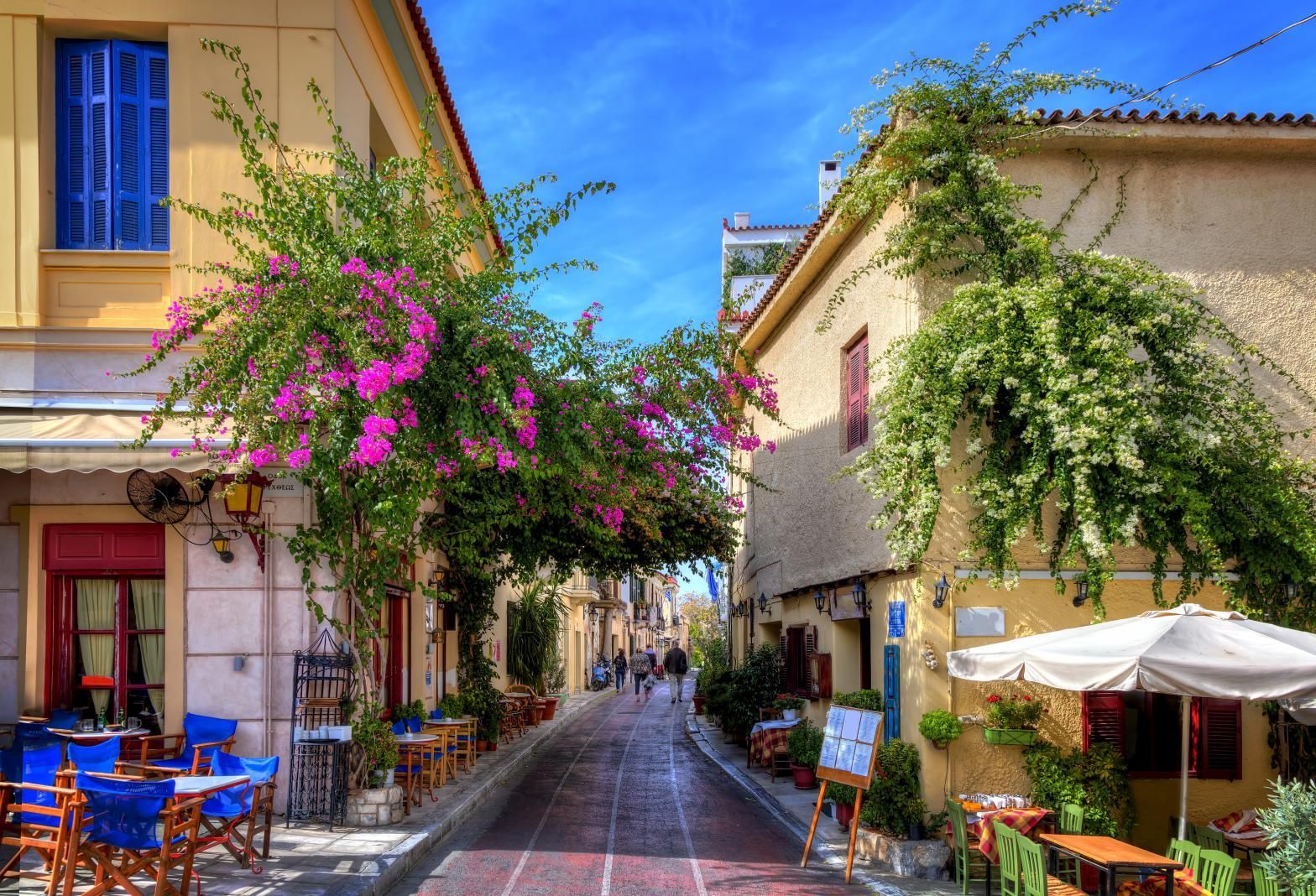
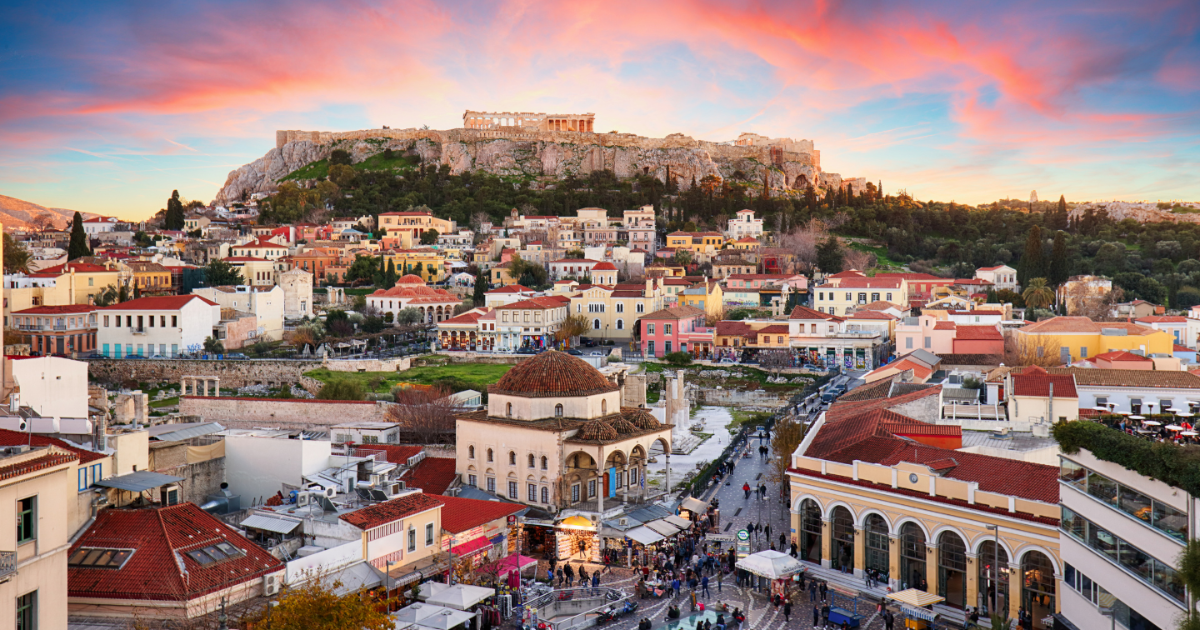
At the base of that sacred hill unfolds Plaka, Athens’s oldest and most enchanting quarter, where the present walks gently beside the past. Narrow alleys twist like ribbons between neoclassical façades washed in soft yellows and blues; iron balconies overflow with bougainvillea that spills down toward shop signs hand-painted in fading letters. The day begins here with the smell of coffee and bread: small bakeries open their shutters, and the first customers greet the owners by name. Cats stretch across doorsteps warmed by sunlight; their lazy elegance fits perfectly with the unhurried rhythm of the neighborhood. Wander without direction. One street leads you to a hidden church whose bells ring softly; another climbs toward Anafiotika, a tiny cluster of whitewashed houses built by island craftsmen who once longed for the Aegean. You may stop at a jeweler’s workshop, where a craftsman polishes silver bracelets under an antique lamp, or at a record shop whose owner still plays rebetiko vinyl from the 1950s. As noon turns to afternoon, the cobblestones shimmer with heat and the smell of oregano drifts from open tavernas. Musicians tune their bouzoukis, and the first notes slide through the air like sunlight over marble. Evening brings lanterns, laughter, and tables spilling onto stairways alive with conversation. Above it all the Acropolis glows, guardian and witness. In Plaka, time slows to the pace of a stroll; every corner reminds you that history is not something preserved—it is something lived every day.
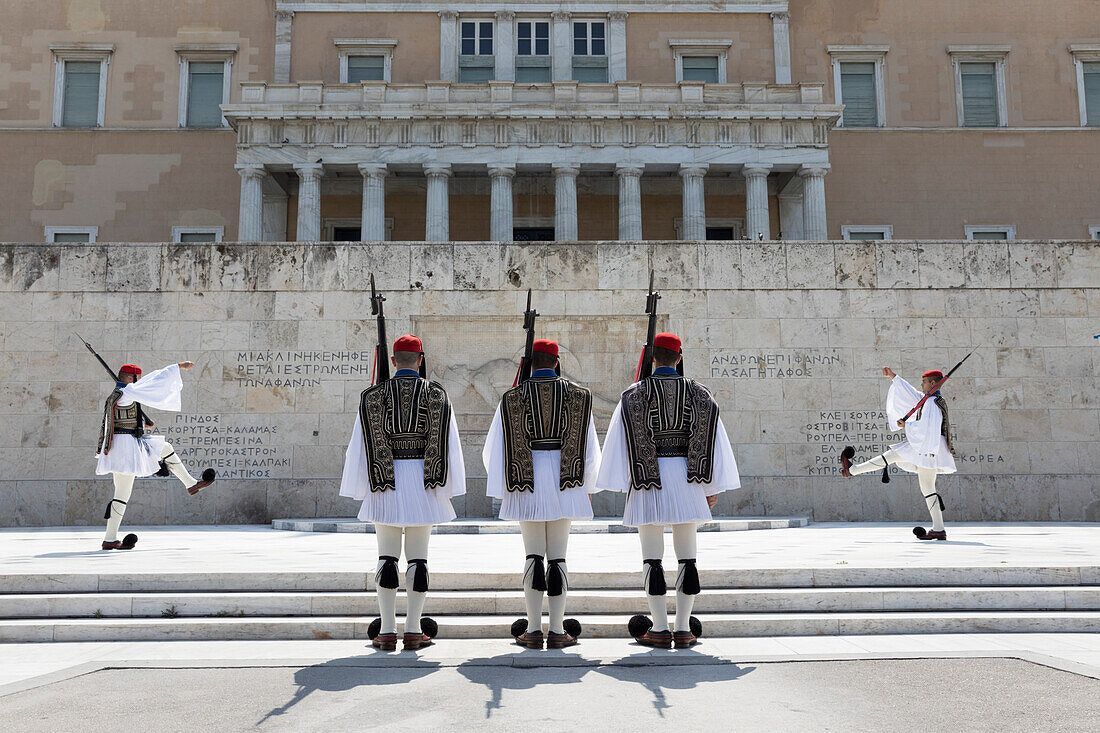
In the very heart of Athens, where the marble of Syntagma Square reflects the ever-moving rhythm of the city, the Tomb of the Unknown Soldier lies in solemn silence before the Hellenic Parliament. Every hour, on the hour, a brief yet deeply symbolic ceremony interrupts the pace of traffic and chatter. The Evzones, members of Greece’s elite Presidential Guard, step forward in perfect synchrony — their movements slow, deliberate, and precise, as if carved from time itself. Dressed in the traditional white pleated fustanella, embroidered vest, and red fez, they embody centuries of courage, discipline, and national pride. Their leather tsarouchia shoes strike the marble with a sharp, hollow sound that echoes through the square, commanding stillness from everyone watching. Each motion — the lift of a leg, the crossing of a rifle, the pause in mid-step — has meaning, a wordless language of honor that needs no translation. On Sundays at eleven, the full ceremonial guard and military band arrive, transforming the space into a living monument of dignity. Children fall quiet, cameras click, and even the pigeons seem to wait. When the guards resume their silent stance, time restarts — but you leave with the sense that Athens has revealed one of its proudest secrets: reverence wrapped in ritual.
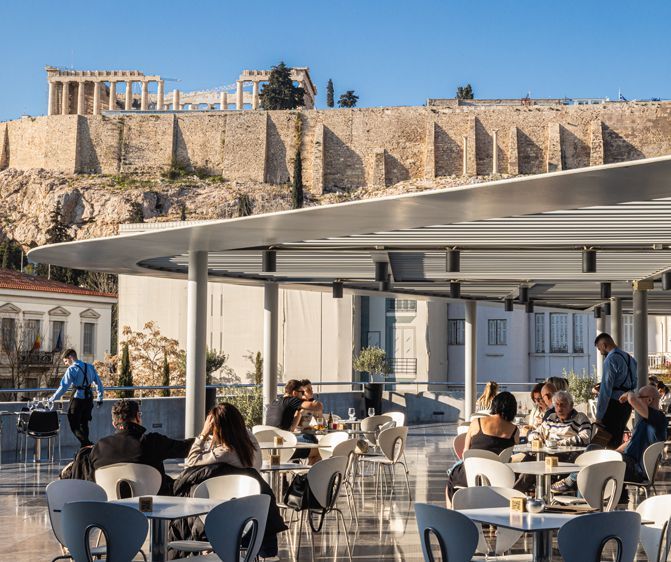
Few places capture the dialogue between antiquity and modern life as elegantly as the Acropolis Museum. This masterpiece of glass and steel was designed not only to house the treasures of the Acropolis but to reflect them — literally and philosophically. As you wander through its luminous galleries, sunlight streams across marble sculptures, making centuries-old forms seem alive again. Beneath the transparent floors, you can see the remains of an ancient Athenian neighborhood, frozen mid-excavation, reminding you that the city never truly stopped breathing. The upper Parthenon Gallery mirrors the temple’s exact orientation, allowing you to look out toward the monument itself as if the centuries had folded together. Yet it’s on the café terrace that the museum’s genius feels most personal. Sit with a cup of Greek coffee or chilled lemonade, the Parthenon perfectly framed in the open air, and feel the hum of the city mingle with the whispers of history. Locals often come here to think, to sketch, or to watch the shadows slide across the columns as the day changes color. The wind carries faint street sounds and the scent of baking bread from Makrygianni below. For a moment, the distance between the ancient and the everyday disappears, and you understand what Athens has always known: beauty is a conversation across time.
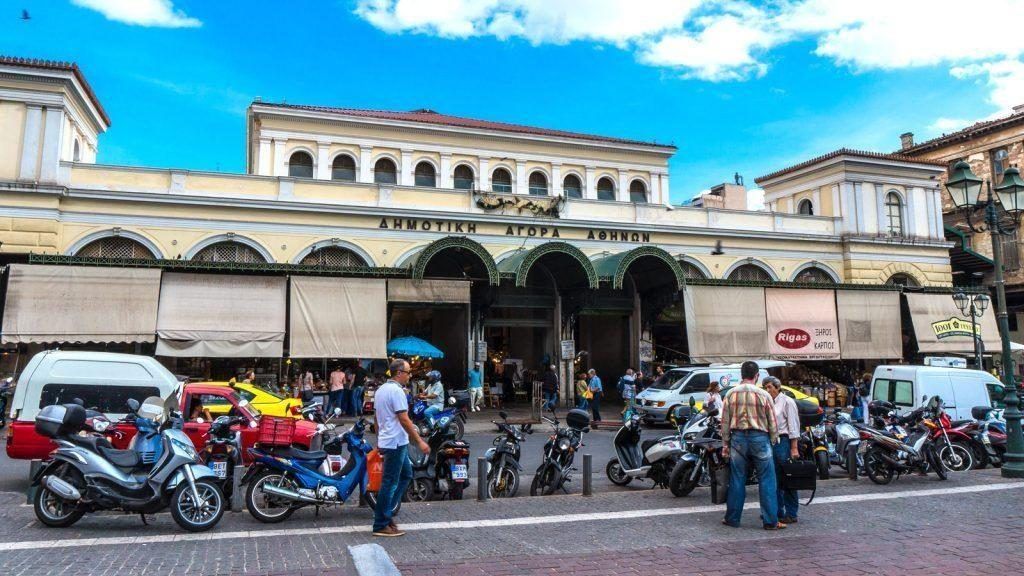
Step into the Varvakios Central Market, and you step into the living pulse of Athens. Beneath its high iron arches, the air thrums with voices and scent — salt, spice, smoke, and laughter woven into a single melody. Here, commerce feels like theater. Fishmongers lay out their shimmering catch as if for an audience; butchers, their aprons bright with the day’s work, call out prices like poets reciting verse. Elderly women in headscarves argue over the sweetness of figs, while children trail behind, clutching warm bread wrapped in paper. Every aisle tells a story: olives in every hue of green and black; towers of herbs bound with string; cheese cut from wheels heavy as stone. In a corner stall, a man stirs soup in a pot that never seems to empty; he serves it with pride and a splash of lemon. Locals know this market not as a tourist stop but as the city’s heartbeat — chaotic, human, endlessly generous. Stand still for a moment and watch how easily strangers become acquaintances over a shared taste. When you finally step outside, blinking in the sunlight, you carry the scent of oregano on your hands and a new understanding of what keeps Athens alive: the art of turning necessity into joy.
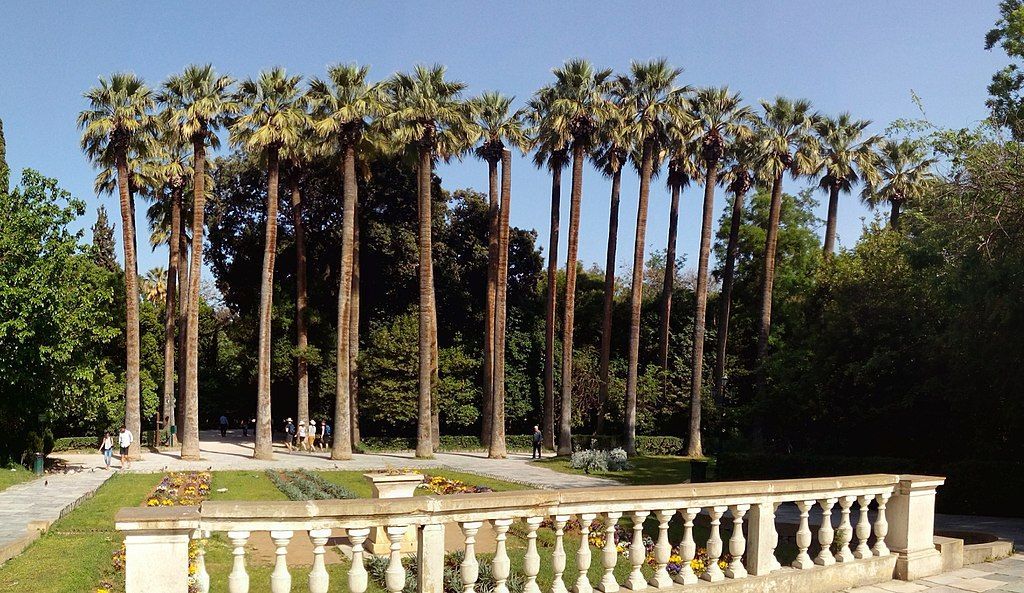
Behind the bustle of Syntagma Square, just steps from the Parliament’s solemn façade, lies the National Garden — a green labyrinth that feels like the city’s sigh of relief. Passing through its gates, the sound of traffic softens into the whisper of leaves. Sunlight trickles down through palm fronds and eucalyptus trees, dappling the pathways where marble fragments lie half-hidden in the grass. Once the private garden of Queen Amalia, it still carries an air of quiet elegance: fountains murmur softly, ancient columns lean sleepily beneath vines, and ducks glide across a pond edged with reeds. Locals use this place the way others use temples — to think, to breathe, to return to themselves. Joggers move in rhythm, grandparents push strollers, and couples stroll beneath arched trellises thick with bougainvillea. You may come across a tiny zoo, a library, or an unexpected statue staring serenely from the shade. In summer, the scent of pine mixes with orange blossoms; in winter, rain turns the paths to mirror pools. Sit on a bench, close your eyes, and the city disappears. When you leave the garden and step again into the sunlit square, the marble seems whiter, the air lighter — as if Athens, too, has taken a quiet breath.
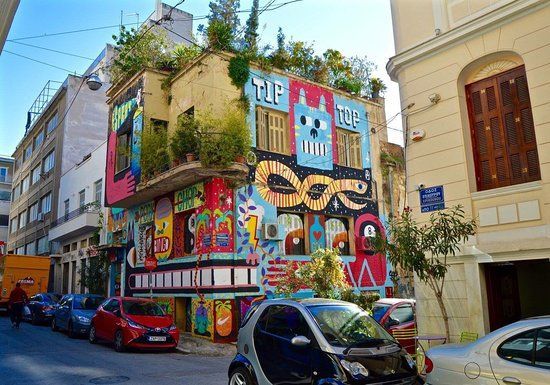
Beyond the ruins and the museums, a different kind of artistry thrives in the streets of Psyrri and Metaxourgeio. Once working-class neighborhoods, now cultural hives, their walls are covered in murals that transform concrete into confession. Mythological figures, political icons, fragments of poetry — each image adds a new verse to Athens’ ongoing story. Some works tower several stories high; others hide in alleyways, visible only to those who wander slowly. The smell of grilled meat drifts from tavernas, the hum of scooters cuts through the air, and everywhere color explodes — blues as deep as the Aegean, reds as bold as passion, blacks as thick as night. Artists paint in the early morning or long after midnight, layering new dreams over old scars. Street art here isn’t rebellion for its own sake; it’s identity made visible, a declaration that Athens is not just ancient but alive, unafraid to speak. Stop for a coffee at a corner café, and you might see a painter cleaning brushes at the next table, quietly watching his work blend into the rhythm of the city. In these neighborhoods, beauty doesn’t hide behind museum glass — it lives in motion, raw and unguarded, as Athens itself always has.
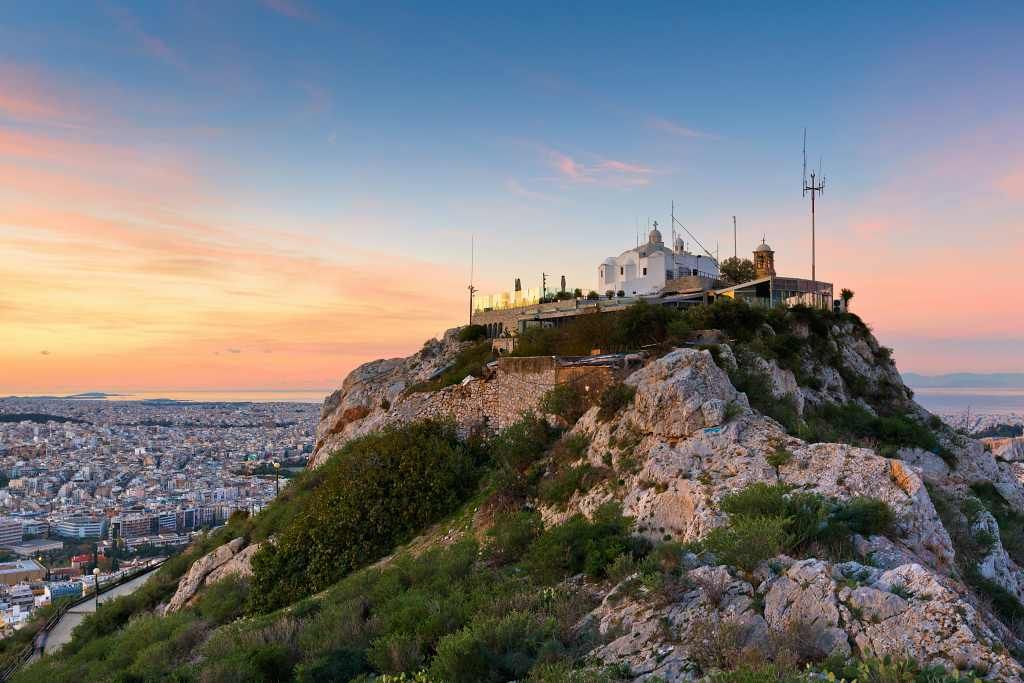
Rising above the city like a sentinel, Mount Lycabettus offers the most breathtaking view in Athens — one that seems to stretch beyond geography into mythology. The climb begins through pine-scented paths, each turn revealing more rooftops and more sky. If you prefer ease, the funicular hums steadily upward through the rock, emerging at the summit where the small white chapel of St. George stands against the wind. From here, Athens unfolds like a living map: the Acropolis gleaming on its hill, the Panathenaic Stadium curving in marble, the sea shimmering faintly on the horizon. As evening approaches, the city blushes under the setting sun, its thousands of windows catching the light like scattered gold. People gather quietly — couples, photographers, travelers, locals who come just to watch the color change. A soft breeze carries the scent of thyme and the distant toll of church bells. When darkness falls, the Acropolis glows like an ember in the vastness below, and the noise of the streets becomes a faint murmur. You stand above it all, yet feel completely connected. Mount Lycabettus doesn’t just offer a view; it offers perspective — a moment when the whole of Athens fits inside your gaze and your heart at once.
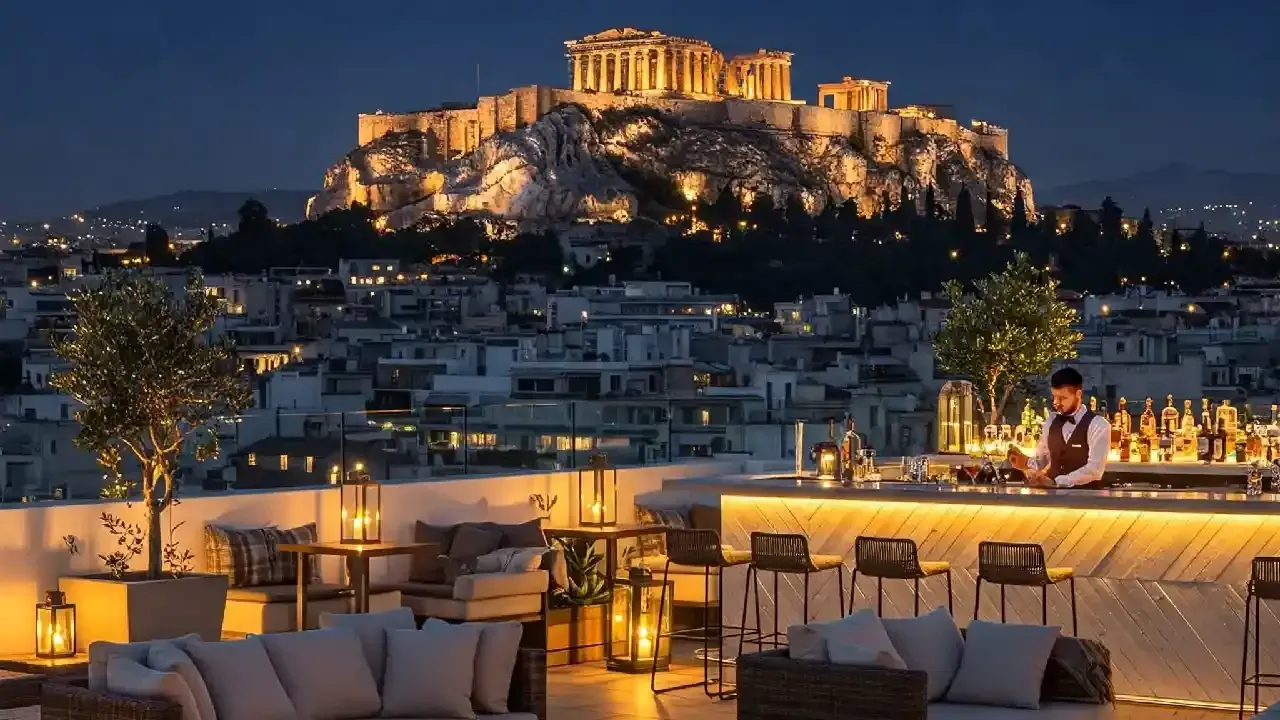
When the sun sinks behind the hills, Athens exchanges its daylight grandeur for intimacy and warmth. The city that once debated philosophy now debates where to eat, where to listen, where to linger longest. Streets in Koukaki, Plaka, and Exarchia glow under strings of lights as tavernas fill with music and conversation. The scent of charcoal drifts through the air, mingling with the tang of lemon and oregano. Tables crowd the sidewalks, laughter spills into the lanes, and the night becomes communal. Order grilled octopus brushed with olive oil, dolmadakia bursting with herbs, a slice of fried cheese that melts on your tongue. Sip an Assyrtiko wine from Santorini, or a chilled glass of ouzo that tastes faintly of anise and sea air. Musicians play rebetiko tunes that speak of longing and joy; strangers share dances as easily as they share bread. Up on the rooftops, the Acropolis glows — a silent witness to the city’s eternal appetite for life. Here, time dissolves. Midnight feels like early evening, and the conversation never ends. In Athens, the night isn’t a closing chapter; it’s another sunrise turned inside out.
To truly understand Athens, you must see it not as a checklist but as a dialogue — between traveler and city, past and present, comfort and curiosity. A private tour offers that conversation in its most personal form. Your driver navigates streets that twist between centuries, pointing out details that maps forget: the hidden courtyard behind the university, the bakery that still uses a wood-fired oven, the corner where a famous poet once wrote. With each stop, the story deepens. At the Acropolis, a licensed guide — historian or archaeologist — transforms marble into meaning, describing how faith, politics, and art converged on this hill. In the Agora, they trace the birth of democracy in the shadows of ruined stoas. Between sites, the drive itself becomes part of the journey — a moving panorama of neighborhoods, from elegant Kolonaki to bohemian Psyrri. There’s time for coffee, for photos, for silence. The itinerary bends to curiosity, not schedule. By the end of the day, you will have seen not only Athens’s monuments but its moods. That is the gift of traveling privately: freedom without haste, insight without lecture, comfort without distance. For personalized tours and premium transfers across Greece, visit www.athenaos.gr — where every journey begins with understanding, and every mile carries a story.

Share:
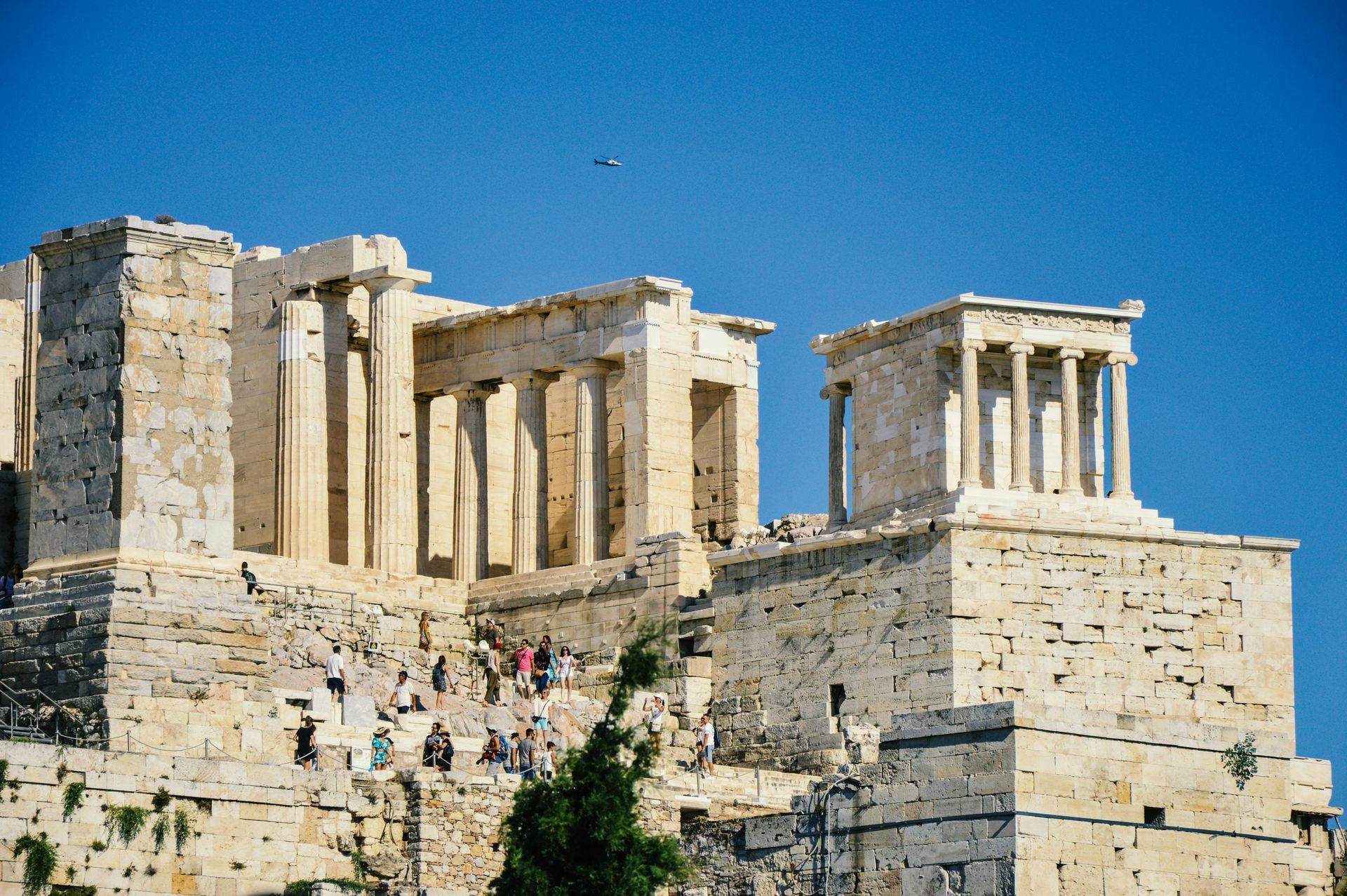
According to the official website of the Hellenic Ministry of Culture and Sports : Admission to archaeological sites, historical sites, monuments and museums owned by the State and managed by the Hellenic Ministry of Culture and Sports is free of charge for all visitors (without fee payment), on the following dates: March 6th (in memory of Melina Mercouri) April 18th (International Monuments Day) May 18th (International Museums Day) The last weekend of September annually (European Heritage Days) October 28th (National Holiday) Every first and third Sunday of each month from November 1st until March 31st. The free admission tickets for these dates are exclusively issued at the ticket offices, while you can generally book your tickets for more than 25 Museums, Monuments & Archaeological Sites in Greece on https://hhticket.gr . Additionally, please note that there is increased attendance and the availability is limited. If you want to secure your free entry to the country’s top museums and monuments, such as the Acropolis and its museum, you can book a tour of our travel agency here . Mark your calendar for these entrance fee–free dates and embark on a journey through Greece’s captivating history and cultural marvels.
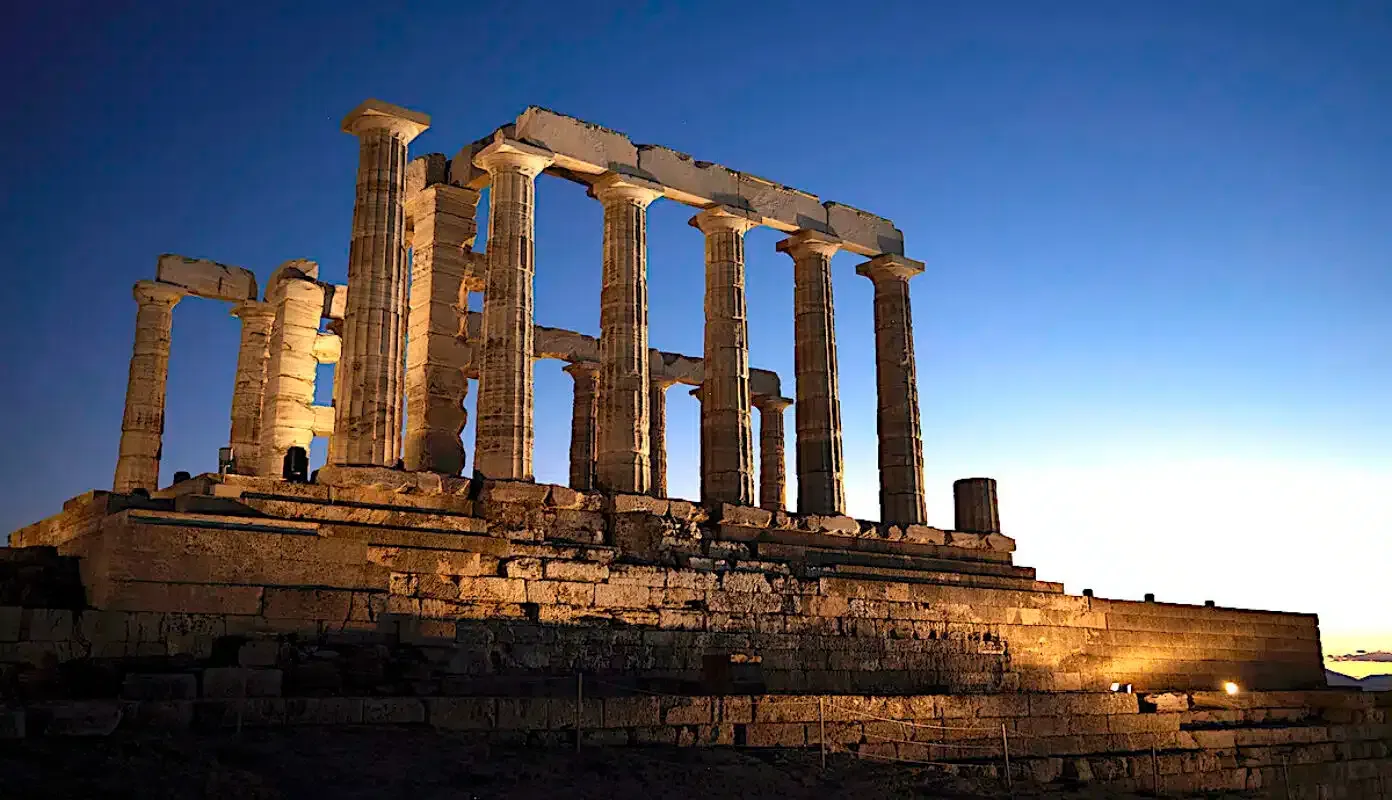
In a unique pairing of ancient heritage and modern art, the Ministry of Culture of Greece is revamping the lighting of the iconic Temple of Poseidon in Sounio . The inauguration for the lighting event, scheduled for Monday, September 16th at 7:30 PM, will be broadcast live by ERT2 and ERT World.